
ASCL Certified Cryptocurrency Crime Investigator
Learn to trace cryptocurrency transactions, investigate wallets and build evidence for real-world cases. This course is designed by Rohas Nagpal and certified by Asian School of Cyber Laws.
How a crypto crime is traced
Trace the funds. Follow the stolen bitcoin from the victim's wallet through each hop, and cluster the addresses one person controls.
- Access
- 12 months
- India Fee
- ₹25,000 + GST
- Global Fee
- US$ 299
- Batch starts
- 1 December 2026
1. Cryptocurrency-enabled crime is a trillion-dollar global problem.
This is not surprising considering the massive size of the crypto market. In 2025, the volume of just two crypto stablecoins (USDT + USDC) was $33 Trillion. That's more than the annual GDP of the US and 8x India's GDP!
The Growing Scale of Cryptocurrency Crime
Cryptocurrencies are increasingly used in fraud, ransomware, money laundering, investment scams and organized crime.
Investigators must trace stolen funds, identify wallet relationships, follow transactions across blockchains and connect on-chain activity with real-world evidence.
Criminals Are Using More Sophisticated Techniques
Criminals use cross-chain bridges, decentralized exchanges, mixers, privacy technologies and complex transaction chains to conceal the movement of funds.
Investigations increasingly require blockchain analytics, smart contract analysis, OSINT and digital forensics.
AI Is Transforming Cryptocurrency Investigations
AI agents can help investigators analyze large transaction networks, identify suspicious patterns, trace funds across multiple blockchains and correlate blockchain activity with external intelligence.
Human investigators remain essential for evaluating evidence, establishing attribution and preparing defensible findings.
2. What this course will enable you to do
- 1. Investigate BitcoinTrace Bitcoin transactions, analyse wallet activity, identify address clusters, and investigate the movement of illicit funds.
- 2. Investigate EVM BlockchainsTrace transactions, analyse smart contracts, investigate token transfers, and track illicit funds across Ethereum and other EVM-compatible blockchains.
- 3. Investigate TronTrace TRX and TRC-20 token transfers, analyse wallet activity, and investigate USDT movements and suspicious transaction networks.
- 4. Investigate SolanaTrace SOL and SPL token transfers, analyse accounts and program interactions, and investigate suspicious activity across the Solana ecosystem.
- 5. Investigate WalletsAnalyse seed phrases, private keys, wallet structures and forensic artifacts, investigate software and hardware wallets, and link wallets to real-world identities.
- 6. Investigate Smart Contract Attacks Analyse reentrancy, flash loans, oracle manipulation, access control failures and other smart contract exploits.
- 7. Investigate Cryptocurrency Tokens Analyse token contracts, transfers, approvals and token standards across different blockchains.
- 8. Correlate On-Chain and Off-Chain Evidence Connect blockchain transactions with digital artifacts, external intelligence and service-provider records.
- 9. Investigate Cryptocurrency Crimes Investigate investment scams, ransomware, exchange hacks, rug pulls, darknet markets and cryptocurrency fraud.
- 10. Investigate DeFi Protocols Analyse bridges, DEXs, lending protocols, staking platforms, yield aggregators and other DeFi infrastructure.
- 11. Investigate Cryptocurrency Exchanges Trace deposits, withdrawals, swaps and fund movements through centralized and decentralized exchanges.
- 12. Investigate Stablecoins Trace stablecoin transfers, analyse issuer controls, and investigate token freezing and recovery mechanisms.
3. Building a career in Cryptocurrency Crime Investigation
As cryptocurrency adoption grows, so does the need for professionals who can investigate financial crimes, trace digital assets, analyse blockchain evidence and support legal proceedings.
Freelancing & consulting opportunities
Professionals can build independent practices serving law firms, fraud victims, cryptocurrency exchanges, financial institutions and corporate investigation teams.
Potential assignments include tracing stolen funds, investigating investment scams, analysing suspicious wallets, conducting transaction investigations, preparing forensic reports and assisting with litigation or asset recovery.
Who needs these services?
- Law enforcement agencies
- Cryptocurrency exchanges
- Virtual Asset Service Providers
- Banks and Fintech companies
- Blockchain projects
- Law firms
- Insolvency professionals
- Forensic accounting firms
- Cybersecurity companies
- Victims of cryptocurrency fraud
4. You get an army of AI Agents
This course comes with specialised AI agents for cryptocurrency investigation.
5. What you'll study and how
Check out this quick video to understand how the course is designed.
Cryptocurrency Wallet Investigation & Forensics
Wallets, keys and addresses, and how to link wallet activity to real people.
1. Foundations
Seed phrases, keys and wallets, wallet types, wallet forensic artifacts, and deterministic wallet structures.
2. Wallet generation
Generating Bitcoin wallets with BitAddress, generating wallets in Python, and an ETH vanity address generator.
3. Explorers
Blockchain address prefixes, blockchain explorers, and a deep dive into EVM explorers.
4. Wallet-specific investigations
Investigating 14 wallets: Binance, Brave, Coinbase, Electrum, Exodus, Gnosis Safe, Ledger, MetaMask, Monero GUI, Nexus, Phantom, Trezor, Trust Wallet and Zengo.
5. Advanced investigation topics
Service wallets, cross-chain wallet activity, and linking wallets to real-world identities.
6. Investigation checklists
6 checklists: private key, address, seed phrase, service wallet, blockchain explorer and wallet investigation.
7. Application
Best practices for wallet forensics, and two crypto crime challenges: The Zimblia Infiltration, and Homicide & Digital Asset Recovery.
Technical Foundations for Digital Investigations
The blockchain, smart contract, token and internet knowledge an investigator needs.
1. Blockchain technology
Blocks, transactions, ledger and record-keeping models, hashing functions, Merkle trees, consensus mechanisms, validators and miners, transaction propagation, immutability and forks. Blockchain nodes, RPC endpoints, blockchain APIs, public vs. private node infrastructure, and rate limits and API key management.
2. Smart contracts
Smart contract basics, and 10 vulnerabilities and attacks: access control failure, flash loan attacks, front-running (MEV), governance takeover, integer overflow/underflow, oracle manipulation, reentrancy, unchecked return values, upgrade function abuse and weak randomness. Checklist for smart contract analysis.
3. Token standards
Introduction to blockchain tokens, building tokens with OpenZeppelin, and token standards on 15 platforms: Algorand, Avalanche, Bitcoin-based, BNB Chain, Cardano, Cosmos, EVM, Hedera, Move-based, Polkadot/Substrate, Solana, Stellar, Tezos, TON and Tron. Checklist for token analysis.
4. Internet & web technology
Internet Protocol, DNS, HTTP, SMTP, FTP, SSL/TLS certificates, web servers, cloud infrastructure, content delivery networks and web browsers. 6 checklists: IP address, DNS, web server, FTP server, email and browser investigation.
5. On-chain and off-chain data
On-chain and off-chain data types and sources, and linking on-chain to off-chain evidence.
6. Python for investigators
Introduction to Python, and Python libraries for blockchain and cryptocurrency investigation, digital forensics and disk analysis, malware analysis and reverse engineering, browser forensics, and penetration testing.
Blockchain & Cryptocurrency Investigation
How crypto crimes work, and how to investigate them across protocols and blockchains.
1. Foundations of crypto crime investigation
How to think like an investigator, Silk Road and how it changed investigation forever, and early Bitcoin thefts and exchange hacks.
2. Types of crypto crime
Ponzi schemes and investment scams, ransomware and malware, DeFi exploits and rug pulls, darknet markets and crypto-enabled illicit trade, and social engineering, identity exploits and other crimes.
3. Investigating crypto crime
Investigating cryptocurrency financial crimes, cryptocurrency-enabled money laundering, and cryptocurrency use in organized crime.
4. Investigating DeFi protocols & infrastructure
14 types: bridges, centralized exchanges, DEXs, derivatives, lending protocols, liquid staking protocols, NFT marketplaces, oracles, privacy protocols, restaking protocols, RWA protocols, stablecoins, synthetics and yield aggregators.
5. Investigating blockchains
The Bitcoin, EVM, Tron, Binance and Solana ecosystems, alternate blockchains, and freezable tokens and chain controls.
Cryptocurrency Investigation Simulations
Nine 30-minute simulations. In each one, you investigate a case and make critical decisions.
Simulation 01A darknet market has opened
Investigate a darknet market and make critical decisions about tracing, attribution and evidence integrity.
Simulation 02₹18.6 crore has left the treasury wallet
Investigate a major crypto theft and make critical decisions about tracing, attribution and asset recovery.
Simulation 03BorealisX has stopped withdrawals after its founder died
Investigate a collapsed crypto exchange and make critical decisions about custody, insolvency, attribution and asset recovery.
Simulation 04The Trusted Interface
Investigate a compromised DeFi interface and make critical decisions about malicious approvals, asset tracing and insider attribution.
Simulation 05The Missing Customer Assets
Investigate the collapse of a crypto exchange and determine how customer assets moved, who controlled them and what can still be recovered.
Simulation 06The Ransom That Could Never Be Paid
Investigate a ransomware incident and determine whether the payment demand conceals an irreversible destructive attack.
Simulation 07The Blockchain That Did Not Exist
Investigate a crypto investment scheme and determine whether its blockchain, balances and promised returns ever existed.
Simulation 08The Ported Number
Investigate a SIM-swap cryptocurrency theft and distinguish control of a phone number from control of accounts, wallets and the criminal operation.
Simulation 09The Missing Seizure Coins
Investigate cryptocurrency missing from official custody and determine what happened without compromising the underlying criminal case.
Toolkit for Crypto Investigation and Blockchain Forensics
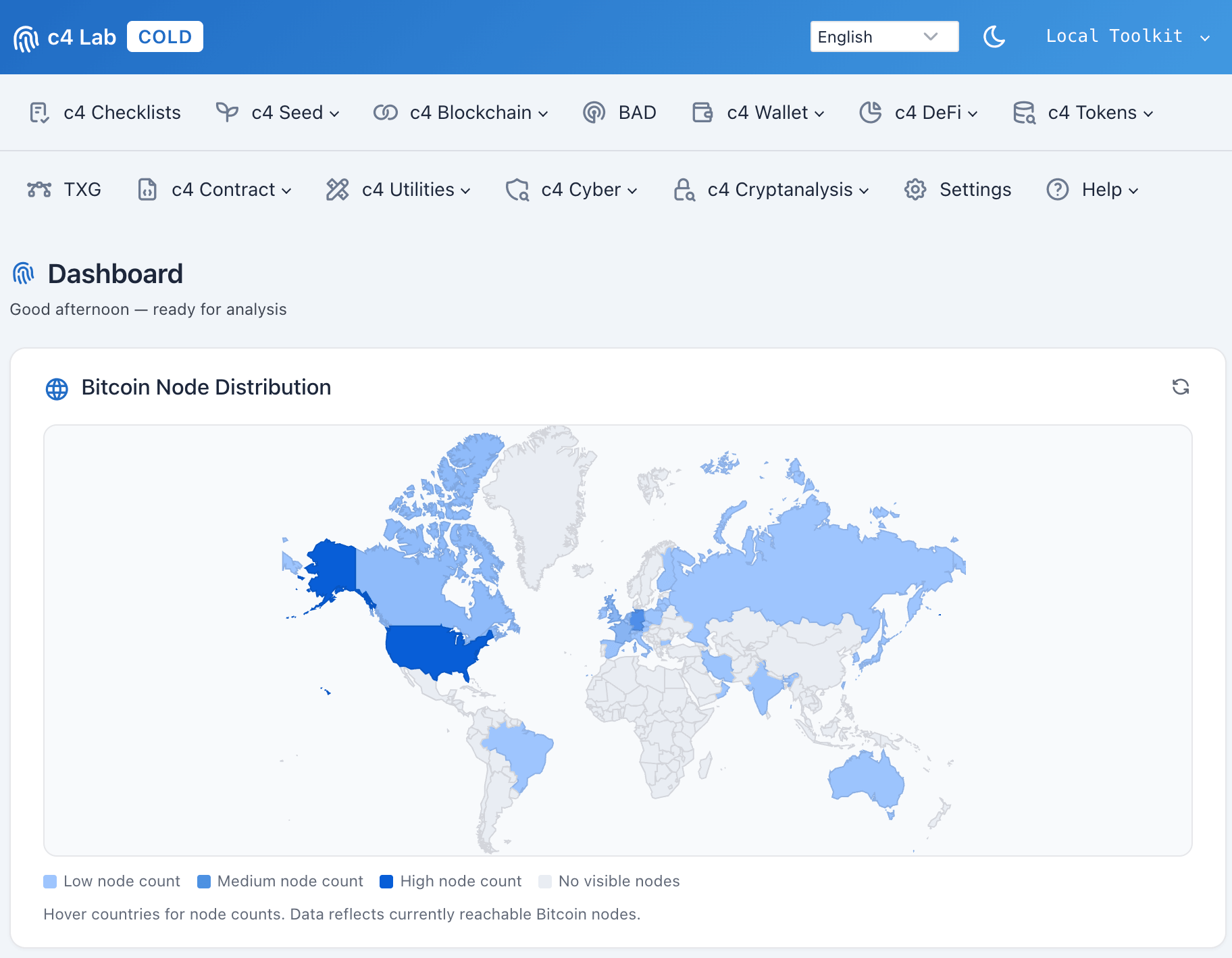
A downloadable toolkit for blockchain forensics, wallet analysis, OSINT and cryptanalysis. It runs on your own computer, with lifetime access for authorized students.
1. Wallet and seed investigation
Wallet File Analyzer for wallet.dat, keystore and JSON wallet files, Wallet Profiler, MetaMask Analyzer, Seed Phrase Investigator, Seed Phrase Recovery for incomplete BIP39 phrases, Seed Phrase Creator, Offline EVM Wallet, and EVM and UTXO transaction tools.
2. Blockchain analysis
Interactive transaction graphs, Bitcoin and EVM transaction decoders, transaction receipts, internal transactions, smart contract analysis, Bitcoin mempool, TRC-20 and USDT tracking, and Monero address validation, across Bitcoin, Ethereum, Polygon, BNB Chain, Tron and other chains.
3. Blockchain Address Directory
Exchange, ransomware, label and scam-database lookups, with three bundled reference databases.
4. Tokens, DeFi and markets
Token metadata, trading pairs and holders, DeFi protocol and TVL data, stablecoin supply and peg deviations, yield pools, and cryptocurrency market information.
5. OSINT
WHOIS, DNS, reverse DNS, IP geolocation, email analysis, username investigation links, domain history, SSL/TLS certificates, log analysis and Shodan lookups.
6. Image and file examination
EXIF and GPS metadata, screenshot OCR, QR-code decoding, image comparison, steganography screening, hex-to-image conversion, file hashing, document and SQLite examination, crypto artifact searches and file-type identification.
7. Cryptography, passwords and data
Hashing and hash identification, AES, 3DES, RC4, XOR and RSA, PGP inspection, password analysis, encoding and conversion tools, regex and text extraction, CSV analysis, and time and block-time calculators.
8. Investigation checklists
16 checklists, including private keys, addresses, seed phrases, investment scams, pig butchering, rug pulls, NFT fraud, wallet compromise, exchange hacks, money laundering, darknet markets and ransomware.
AI Agents
Bitcoin Investigator
Traces Bitcoin addresses and transactions, and produces reports linked to their sources.
EVM Investigator
Investigates Ethereum and other EVM-chain transactions, addresses and asset movements.
Tron Investigator
Investigates TRON transactions, token activity and account permissions.
Solana Investigator
Investigates Solana transactions, account roles, and SOL and SPL token movements.
Smart Contract Investigator
Examines deployed contract code, proxy settings and upgrade history.
Wallet Investigator
Profiles addresses across networks and assesses evidence of counterparties, links and control.
Cryptocurrency Crimes Investigator
Investigates reported thefts, scams and suspected laundering, and builds evidence-linked case timelines.
DeFi Investigator
Reconstructs activity on DeFi protocols from on-chain evidence.
Stablecoins Investigator
Investigates stablecoin issuers, issuer controls, movements and departures from the dollar peg.
6. Course fee & application
Join today and start learning immediately with full access to all course materials, including manuals, tools and videos.
Choose your fee
For participants in India
What's included
- The "ASCL Certified Cryptocurrency Crime Investigator" certification on passing the course (opens in a new tab)
- 1-year access to labs, videos and simulations (opens in a new tab)
- Lifetime access to 9 specialised AI agents (opens in a new tab)
- 8 expert-led live online sessions (opens in a new tab)
- 1-year access to the Cryptocurrency Investigation & Forensics Manual, including updates (Volume 1 (opens in a new tab)), (Volume 2 (opens in a new tab)), and (Volume 3 (opens in a new tab))
- 3 real cryptocurrencies for real-world learning (opens in a new tab)
- Lifetime access to the Toolkit for Crypto Investigation and Blockchain Forensics (opens in a new tab)
- Listing in the ASCL Experts Directory
Opens Razorpay securely in a new tab. By paying, you agree to our Terms of Use and Refund Policy.
Paid? Fill the application form →Every crypto crime leaves a trail. Learn to follow it.
Trace transactions, investigate wallets and build evidence that stands up in real cases.