
An email from your actual boss can be a scam.
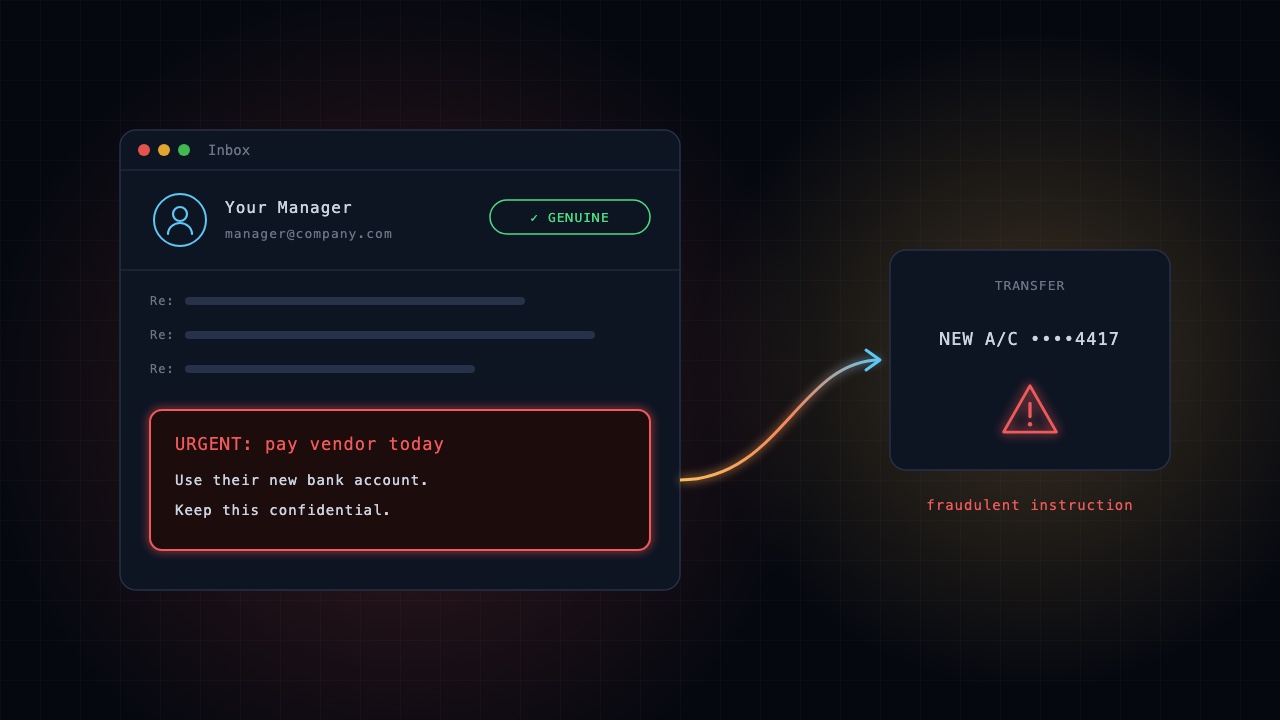
Hackers sometimes compromise genuine business email accounts and use them to send fraudulent instructions.
This is called Business Email Compromise (BEC).
Imagine receiving an email from your boss asking you to urgently transfer money to a vendor's new bank account.
The email address is genuine. The conversation history is genuine. The instruction is fraudulent.
3 practical precautions
- Verify payment changes: Call the person using a number you already know, especially for new bank details.
- Watch for unusual requests: Urgent transfers, confidential payments and requests to bypass normal approvals are red flags.
- Check email forwarding rules: Attackers sometimes create hidden forwarding rules to monitor conversations even after the account password changes.
The takeaway: A genuine email address doesn't guarantee a genuine instruction.
Build ➜ Hack ➜ Investigate ➜ Secure ➜ Audit
Master the complete cyber lifecycle with the ASCL Certified Cyber360 Professional course.
Explore the Cyber360 course