
That innocent-looking QR code could steal your login credentials.
QR codes are everywhere: restaurants, parking meters, payment counters and advertisements.
But a QR code is simply a way to encode information, often a website address.
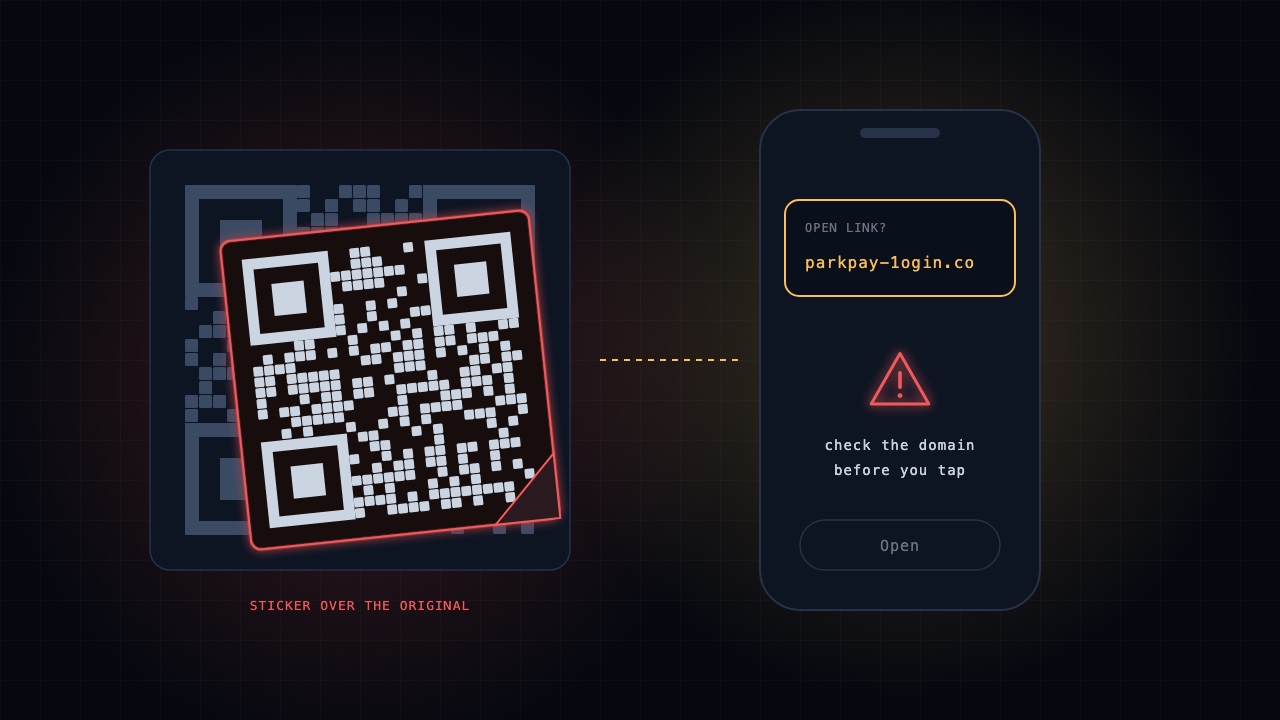
Scammers can place fake QR code stickers over genuine ones, directing you to phishing websites.
3 practical precautions
- Check the URL preview: Before opening a scanned link, examine the actual domain.
- Inspect physical QR codes: Be suspicious of stickers pasted over original codes, especially at parking meters and payment counters.
- Avoid logging in through QR links: If a scanned website asks for passwords or payment details, open the official website or app independently.
Quick test: Scan a QR code with your phone's camera and examine the URL preview before tapping it.
The takeaway: You can't tell where a QR code leads just by looking at it.
Build ➜ Hack ➜ Investigate ➜ Secure ➜ Audit
Master the complete cyber lifecycle with the ASCL Certified Cyber360 Professional course.
Explore the Cyber360 course